Nissan Leaf: When the Nissan Leaf arrived in 2010, it represented a watershed moment in automotive history as the world’s first mass-market electric vehicle.
Fifteen years later, while the electric vehicle landscape has dramatically evolved with sophisticated competitors from Tesla, BMW, and emerging Chinese manufacturers, the Leaf continues to serve as an accessible entry point into electric mobility.
Despite showing its age in some areas, the 2025 Nissan Leaf remains relevant through its combination of affordability, proven reliability, and practical everyday usability.
Nissan Leaf: Design and Practicality Focus
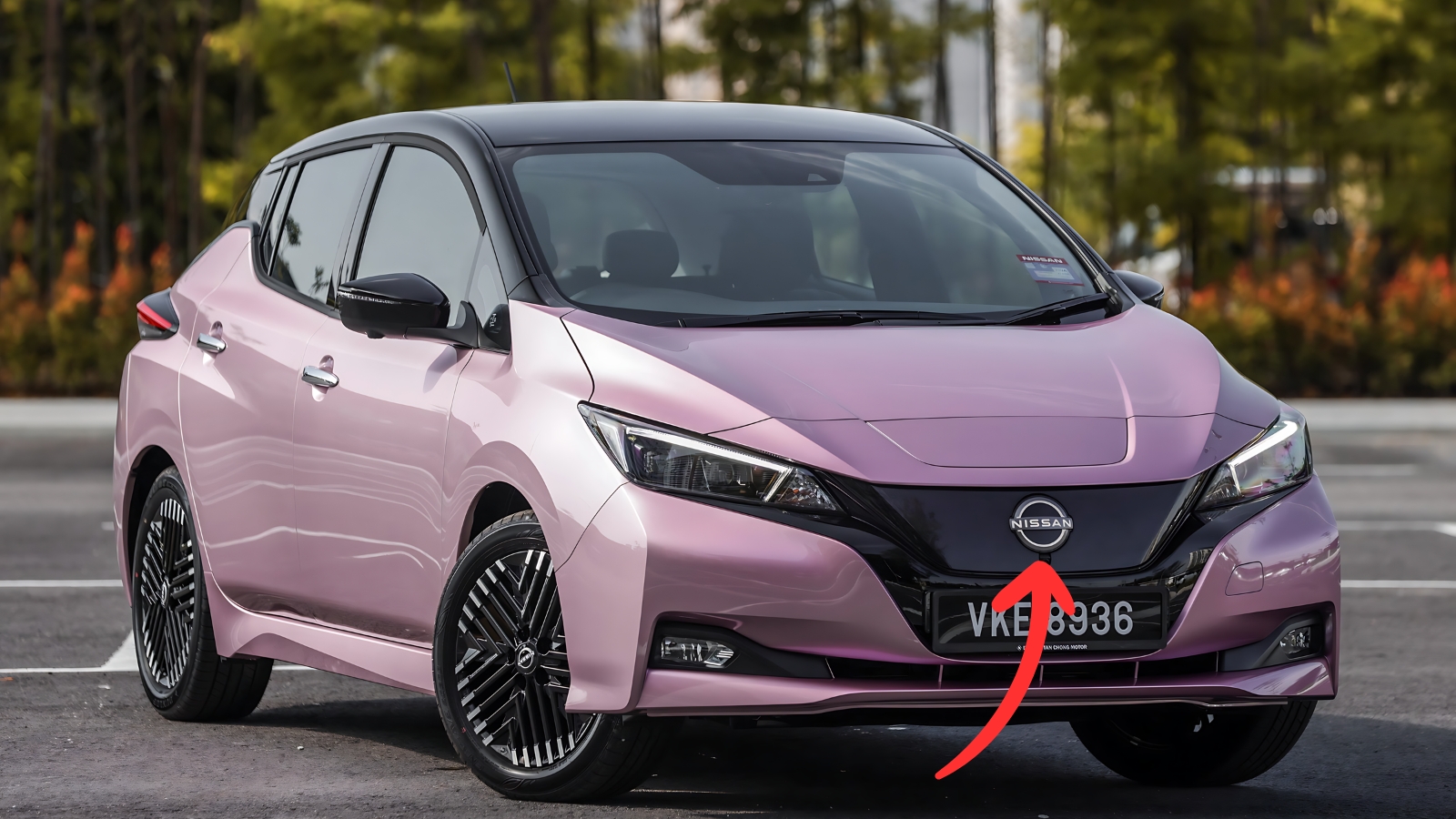
The current second-generation Leaf, introduced in 2018, marked a significant departure from its predecessor’s polarizing styling. The contemporary design features smoother lines, a more conventional hatchback silhouette, and Nissan’s signature V-motion grille that immediately identifies it as part of the brand’s modern lineup.
While not groundbreaking in its aesthetic approach, the Leaf prioritizes functionality over form, resulting in a mature, understated appearance that appeals to mainstream buyers seeking practicality over flashiness.
Interior space represents one of the Leaf’s strongest attributes, offering generous accommodation for five passengers within its compact footprint.
The rear seats fold flat to reveal 24 cubic feet of cargo space, surpassing many electric competitors and rivaling traditional hatchbacks.
The cabin layout emphasizes user-friendly operation with clearly marked physical controls for essential functions like climate control, avoiding the trend toward touchscreen-dominated interfaces that can complicate simple tasks.
Powertrain Options and Performance
The 2025 Leaf lineup offers two distinct powertrain configurations to accommodate different user needs and budgets. The entry-level Leaf S features a 40kWh lithium-ion battery pack paired with a 147-horsepower electric motor, delivering 236 lb-ft of torque for responsive urban acceleration.
This configuration provides an EPA-estimated range of 149 miles, adequate for daily commuting and local errands but limiting for longer journeys.
The Leaf SV Plus upgrades to a larger 60kWh battery and more powerful 214-horsepower motor producing 250 lb-ft of torque.
This enhanced setup extends the driving range to 212 miles while improving acceleration performance, achieving 0-60 mph in approximately 6.5 seconds compared to the base model’s 7.5-second sprint. Both variants utilize front-wheel drive exclusively, with no all-wheel drive option available.
The Leaf’s signature e-Pedal technology allows drivers to operate the vehicle using primarily the accelerator pedal, with regenerative braking providing significant deceleration when lifting off the throttle.
This one-pedal driving experience proves particularly effective in urban environments, reducing brake wear while maximizing energy recovery.
Charging Infrastructure and Limitations
Perhaps the Leaf’s most significant weakness lies in its charging capabilities, which reflect its earlier development timeline. Unlike most contemporary electric vehicles that utilize the CCS (Combined Charging System) standard, the Leaf relies on the CHAdeMO connector for DC fast charging.
This Japanese standard limits the vehicle to maximum charging speeds of 50kW, substantially slower than the 150kW+ rates common among newer EVs.
For home charging, the Leaf accepts standard Level 2 AC charging through a 6.6kW onboard charger. Using a 240-volt home charging station, the 40kWh battery requires approximately 7.5 hours for a complete charge, while the larger 60kWh pack needs 11 hours.
Level 1 charging through a standard household outlet proves impractically slow, requiring over 20 hours for full replenishment.
The CHAdeMO limitation becomes particularly problematic during long-distance travel, as CHAdeMO stations are less common than CCS chargers and typically offer slower charging speeds.
This infrastructure disadvantage significantly impacts the Leaf’s suitability for extended road trips compared to competitors with more versatile charging capabilities.
Technology and Safety Features
Standard equipment includes an 8.0-inch touchscreen infotainment system with Apple CarPlay and Android Auto integration, ensuring smartphone connectivity remains current.
The interface, while functional, lacks the sophistication and responsiveness found in more recent electric vehicles. Higher trim levels add features like navigation, 360-degree camera systems, and Nissan’s ProPilot Assist semi-autonomous driving technology.
Safety credentials remain strong, with the Leaf earning a five-star overall rating from NHTSA. Standard safety equipment includes Nissan’s Safety Shield 360 suite, encompassing automatic emergency braking, blind-spot monitoring, rear cross-traffic alert, and lane departure warning systems.
Value Proposition and Market Position
The Leaf’s most compelling argument lies in its accessibility, with the base S model starting at $28,140 before federal tax credits. This pricing makes it one of the most affordable new electric vehicles available, positioning it as an ideal entry point for buyers transitioning from conventional vehicles.
The value proposition improves further when considering Nissan’s competitive warranty coverage, including an 8-year/100,000-mile battery warranty that provides long-term peace of mind.
Operating costs prove minimal, with the EPA estimating annual charging expenses of approximately $600 for drivers covering 15,000 miles yearly.
Maintenance requirements remain minimal due to the electric drivetrain’s simplicity, with no oil changes, spark plugs, or transmission servicing required.
Future Outlook
Nissan has confirmed that a third-generation Leaf will arrive for 2026, transitioning from the current hatchback format to a crossover SUV design. The upcoming model promises significantly improved range, faster charging capabilities, and adoption of the NACS (Tesla) charging standard, addressing many current limitations.
Nissan Leaf: Conclusion
The 2025 Nissan Leaf occupies a unique position in today’s electric vehicle market as an affordable, proven, and practical choice for buyers prioritizing value over cutting-edge technology.
While its limited range and slow charging constrain its appeal for some users, the Leaf succeeds as a reliable urban commuter and second vehicle for households with access to home charging.
For budget-conscious buyers seeking their first electric vehicle experience, the Leaf offers a sensible introduction to emission-free driving backed by over a decade of real-world refinement and Nissan’s established service network.
1 thought on “Nissan Leaf comes for beat the market of others – look is fabulous”
Comments are closed.