Kawasaki Ninja 400: The modern motorcycle landscape offers numerous entry points into sport riding, but few machines strike the perfect balance between accessibility and performance quite like the Kawasaki Ninja 400.
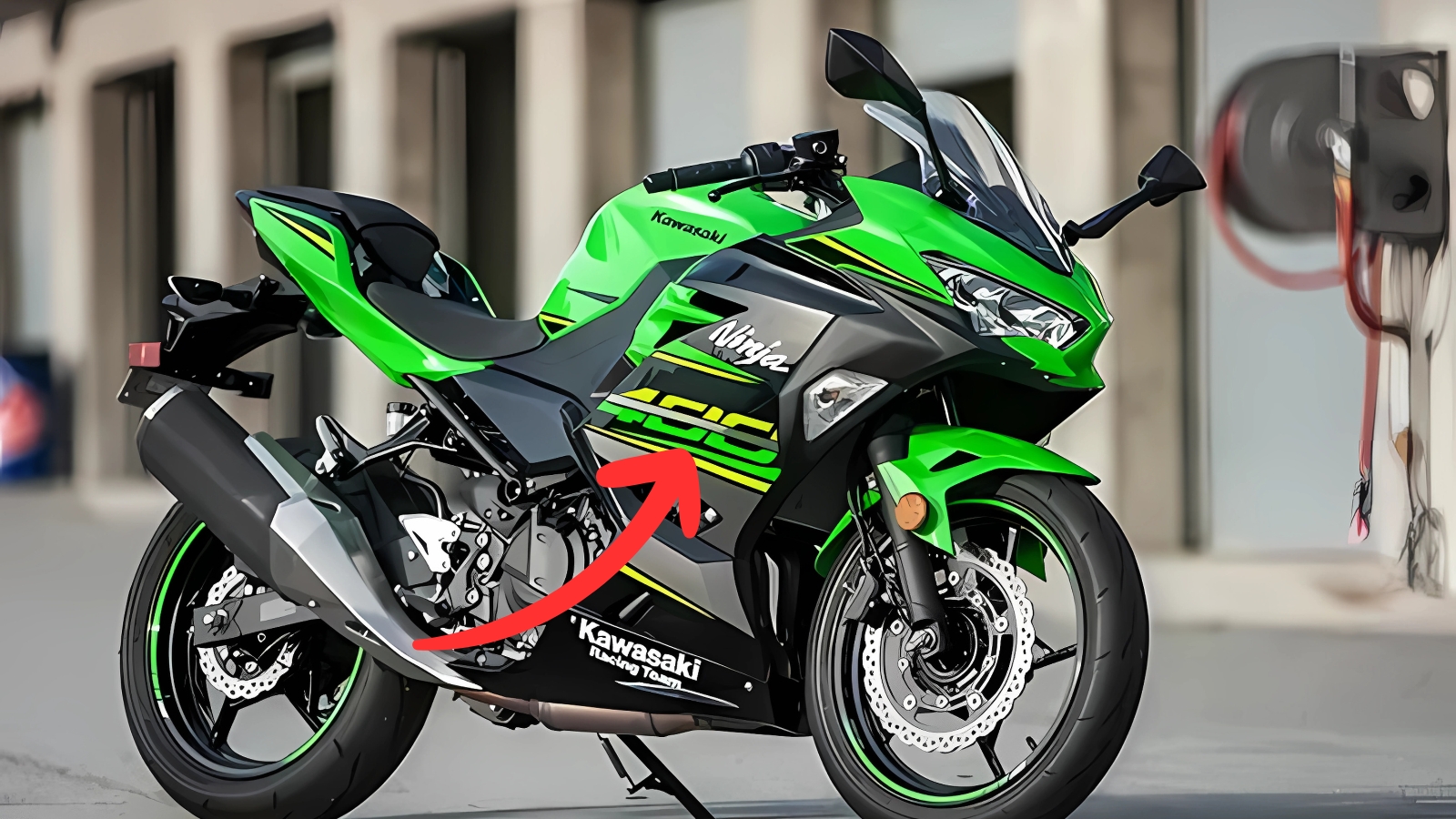
Clad in sharp Ninja styling, the Ninja 400 delivers greater performance than its predecessor due an engine and chassis that are more powerful and significantly lighter.
This remarkable achievement has positioned the Ninja 400 as a standout choice for both newcomers to motorcycling and experienced riders seeking a nimble, engaging platform.
Kawasaki Ninja 400: Engineering Excellence and Design Philosophy
The foundation of the Ninja 400’s success lies in its sophisticated engineering approach. The Ninja 400 features a trellis frame similar in design to that of the Ninja H2.
Kawasaki’s advanced dynamic rigidity analysis was used to ensure optimum rigidity with light weight. The engine is rigidmounted and used as a stressed member.
This design philosophy demonstrates how lessons learned from flagship superbikes can be successfully translated to more accessible machines without compromising structural integrity or performance characteristics.
The visual impact remains unmistakably Ninja, drawing inspiration from Kawasaki’s most prestigious models. Head-turning looks have always been a forte of Ninja models, regardless of displacement. The new Ninja 400 boasts futuristic new Ninja styling inspired by the mighty Ninja H2.
The largevolume bodywork attracts attention, and gives the impression of a larger machine. This design approach ensures that riders aren’t making visual compromises when choosing a smaller displacement motorcycle.
Contemporary lighting technology enhances both aesthetics and functionality. In addition to contributing to the Ninja 400’s sharper looks, slim LED headlamps (each featuring low and high beams, as well as a LEDposition lamp) are highly visible and offer significantly increased brightness.
These technological touches elevate the overall ownership experience while providing practical benefits during various riding conditions.
Powertrain Performance and Character
Kawasaki Ninja 400: The heart of the Ninja 400 lies in its carefully engineered powerplant. The Ninja 400’s 399 cm3 engine delivers a balance of performance and controllability.
The engine offers increased performance at all rpm compared to its predecessor, with good power feeling. Smooth, predictable response contributes to an easy-to-control engine character. Thanks to its efficient design, the compact, lightweight engine has a size on par with 250cc engines.
Performance figures demonstrate the engine’s capability across various scenarios. The Ninja 400 packs a punch with its 399cc parallel-twin engine, delivering 48 HP and 38 Nm of torque.
Its lightweight chassis, at just 168 kg (370 lbs), ensures quick handling and stability. These specifications translate into impressive real-world performance that satisfies both daily riding requirements and spirited weekend adventures.
Acceleration capabilities place the Ninja 400 among the quickest in its class. With a close-to-perfect launch, the Ninja 400 can accelerate from 0-100 km/h in only 4.35 seconds.
For the UK/US guys – that’s 0-60 mph in 4.15 seconds. Pretty wild for what is considered an entry-level sports bike. This performance level ensures that riders won’t quickly outgrow the motorcycle’s capabilities, providing long-term satisfaction and value.
Ergonomics and Rider Experience
Comfort considerations receive careful attention in the Ninja 400’s design philosophy. Relaxed rider triangle accommodates a wide range of rider sizes and riding situations.
Compared to some other models (whose somewhat extreme riding position compromises comfort), the elevated handle position and slightly foot-forward footpeg position put the rider in a position to control the bike while also offering rider comfort.
Accessibility remains a key design priority throughout the motorcycle’s development. While seat height is 785 mm, the slim design of both the seat and the rear of the engine gives riders an unobstructed line for their feet to reach the ground.
This thoughtful approach ensures that riders of various heights can confidently manage the motorcycle at low speeds and during parking situations.
The cockpit design balances functionality with modern aesthetics. The Ninja 400 is equipped with a sophisticated cockpit, featuring a large analogue tachometer flanked by warning lamps on one side, and a gear position indicator and multi-function LCD screen on the other.
This arrangement provides essential riding information while maintaining the clean, purposeful appearance expected from a contemporary sport motorcycle.
Handling Dynamics and Suspension Performance
Kawasaki Ninja 400: Chassis behavior represents one of the Ninja 400’s most celebrated characteristics. One of the standout features of the Ninja 400 is its agile and precise handling. The lightweight trellis frame provides excellent stability and control, making it perfect for riders of all skill levels.
Complementing the frame is the sport-tuned suspension that ensures a smooth and comfortable ride, even when the road gets challenging.
Track testing reveals the motorcycle’s capabilities under demanding conditions. Thanks to its improved chassis, light weight and 17- inch tyres corners are a joy.
Despite being softly sprung, the suspension responds better than you’d expect on a bike of this price, however the motor’s extra performance would justify a second front disc. This feedback from professional testing environments confirms the Ninja 400’s competence across various riding scenarios.
The braking system provides confidence-inspiring stopping power. The large 310mm semi-floating front disc brakes enables incredible stopping power, while the inclusion of ABS technology ensures safe, controlled deceleration under various road conditions.
This combination of mechanical capability and electronic assistance creates a safety net that benefits riders regardless of their experience level.
Kawasaki Ninja 400: Market Position and Value Proposition
Competitive positioning places the Ninja 400 favorably within its segment. The Ninja 400 leads with better power-to-weight ratio and affordability. While the Honda CBR500R offers a larger engine, it’s heavier and pricier.
This advantage extends to overall ownership experience, where the Ninja 400’s combination of performance, reliability, and reasonable operating costs creates compelling long-term value.
The motorcycle successfully appeals to diverse rider demographics. It’s easy to get on with, ultra-reliable, exciting and a marked step up from the 300 in terms of performance and refinement, but with a true 119mph top speed, 200-mile tank range, genuine big-bike character and comfort, the Ninja 400 can be enjoyed by more experienced riders and commuters, too.
The Kawasaki Ninja 400 represents the evolution of accessible sport motorcycles, demonstrating how modern engineering can deliver flagship-level experiences in approachable packages.
Through careful attention to power delivery, handling dynamics, and rider comfort, it establishes new benchmarks for what entry-level sport bikes can achieve while maintaining the accessibility that makes motorcycling welcoming to newcomers.
1 thought on “Kawasaki Ninja 400- The perfect amalgamation of style and features”
Comments are closed.